Zine
Category
Product design
/
/
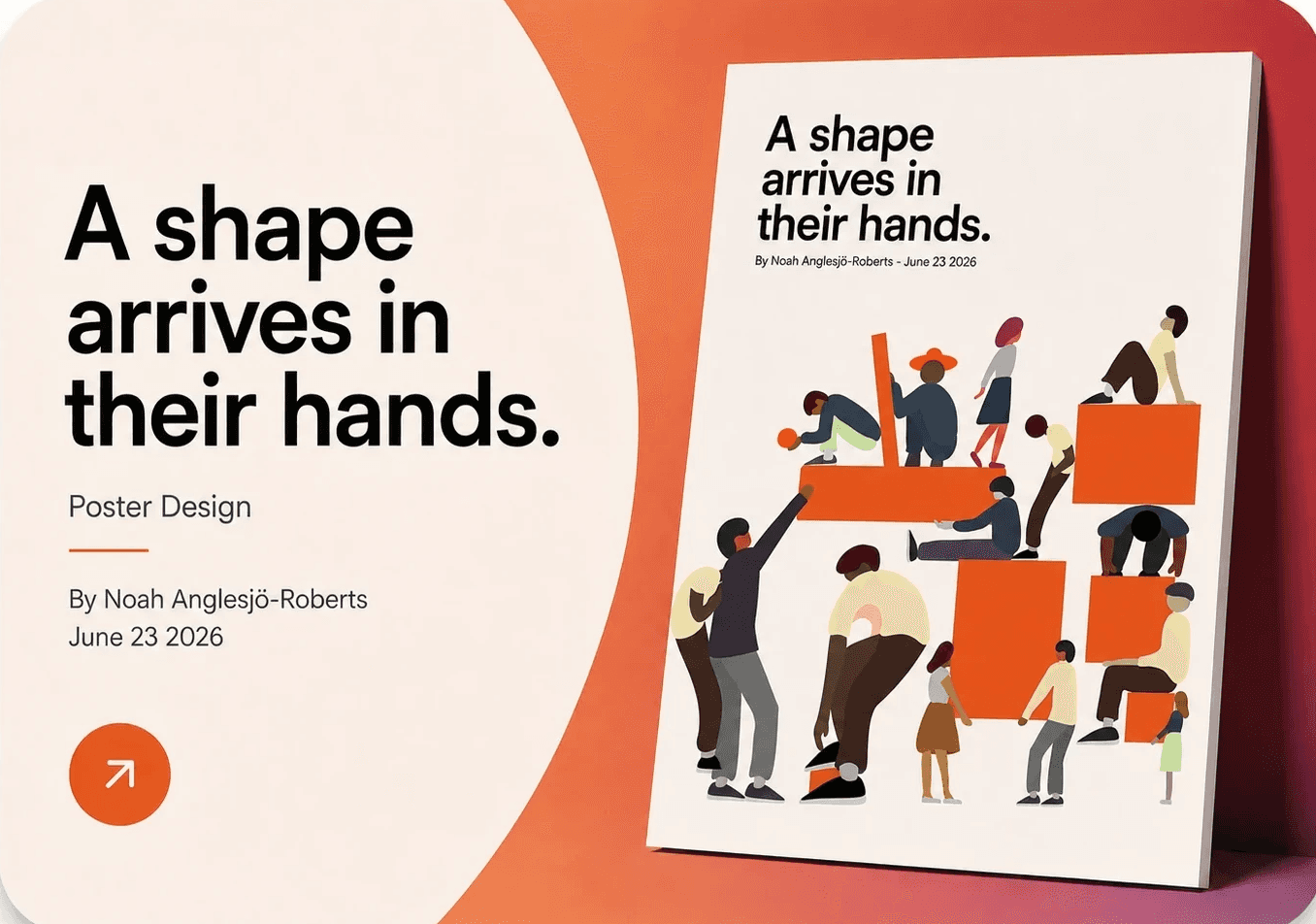
"A Shape Arrives in Their Hands" is a short zine book I created as part of my A level Graphic Design course at Penwith College.

About the Zine
This zine explores the journey of a shape as it moves between different people, spaces and moments of interaction.
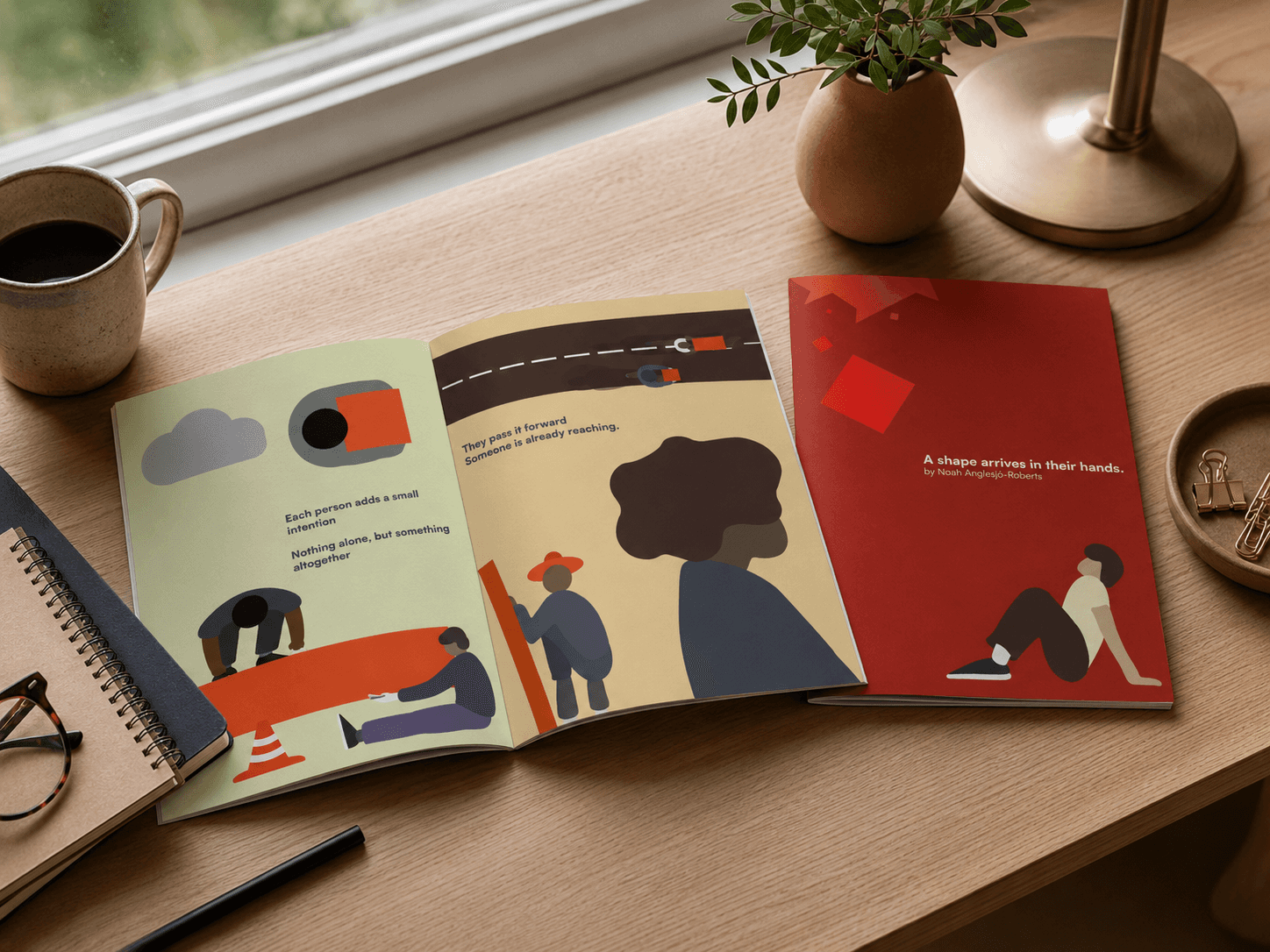
Built around the phrase “A shape arrives in their hands,” the project uses simplified figures, bold colour and minimal compositions to tell a loose visual story. Each page shows the shape being held, passed, steadied or lost, creating a sequence about movement, collaboration and shared intention.
Visual Language
The visual language is based on flat colour, simplified bodies and strong page compositions. I wanted the zine to feel clear and graphic, with each spread working almost like an individual poster.
The use of red and orange shapes creates a visual thread throughout the publication, while softer background colours help each page feel distinct. This contrast gives the zine a consistent identity without making every spread feel the same.

Narrative-Driven
A key part of the zine is the way the images connect across pages. Rather than relying on a traditional written narrative, the story develops through repeated shapes, changing compositions and small moments of interaction between the figures.
Some pages feel controlled and balanced, while others suggest movement, uncertainty or loss of control. This helped me explore how a simple idea can shift in meaning depending on layout, scale and pacing.
Shape, Movement and Freedom
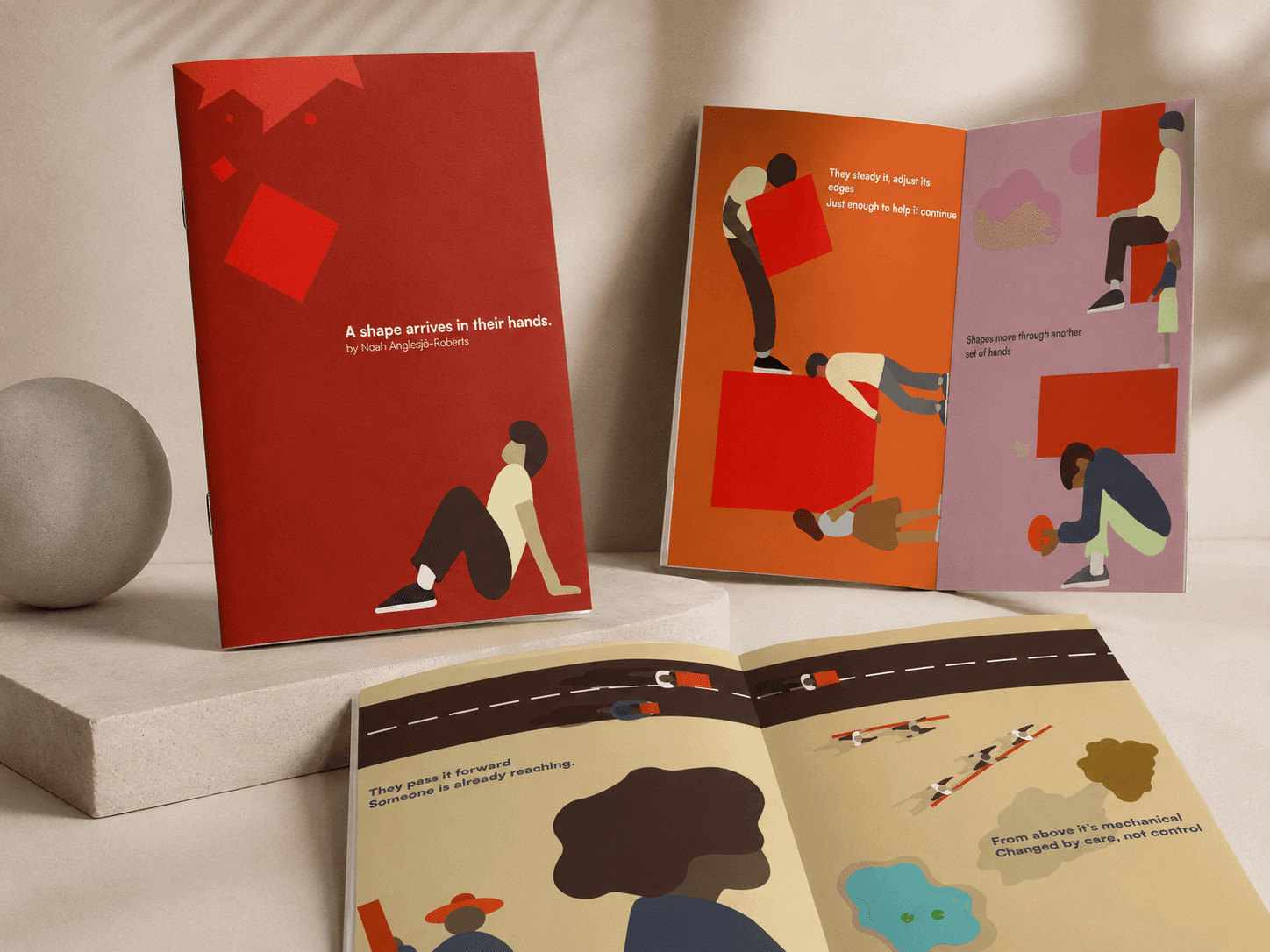
The red shape acts as the central object throughout the zine. It is passed between hands, adjusted, dropped and reinterpreted, becoming a way to show how ideas can change as different people interact with them.
By keeping the imagery simple, I was able to focus on the relationship between the human figures and the object.
Built as a Physical Product
Although the pages work individually, the project was designed to feel strongest as a printed zine. The order, pacing and page turns are important to how the viewer experiences the work.
Seeing the zine as a physical object helped me think more carefully about rhythm, contrast and flow — how one spread leads into the next, and how the cover sets the tone for the whole piece.
Reflection
This project helped me understand how editorial design can communicate through sequence, not just individual images. I became more aware of how pacing, repetition and page layout can shape the viewer’s understanding of a concept.
If I developed the zine further, I would explore more printed formats, paper stocks and binding methods, while keeping the simple visual system and narrative structure consistent.